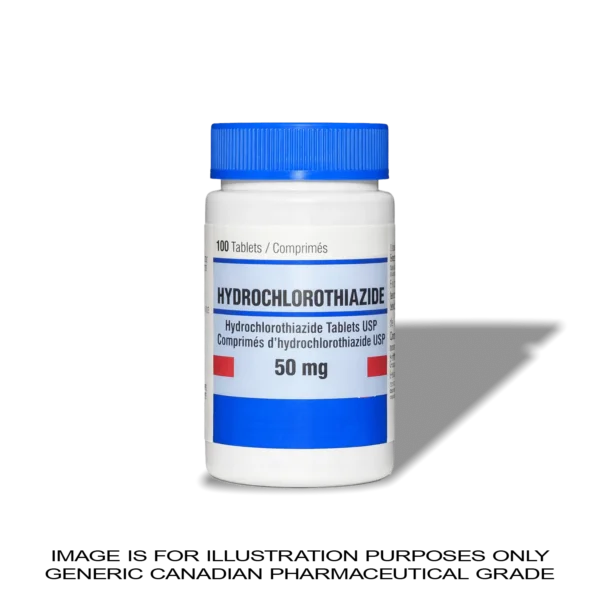
Hydrochlorothiazide 50mg is a thiazide diuretic used to help lower high blood pressure and reduce excess fluid retention (edema). It works by increasing the removal of sodium and water through the kidneys. Each pack contains 100 tablets.
Hydrochlorothiazide is a prescription thiazide diuretic and antihypertensive medication used primarily for the treatment of high blood pressure (hypertension) and certain conditions involving excess fluid retention or edema. Health Canada currently lists multiple hydrochlorothiazide 50mg tablet products as marketed prescription medications in Canada. Hydrochlorothiazide acts primarily within the distal renal tubules of the kidneys, where it reduces the reabsorption of sodium and chloride. This increases the amount of sodium, chloride and water eliminated in the urine, producing its characteristic diuretic effect. Increased sodium excretion can also be accompanied by increased losses of potassium and bicarbonate.
By reducing circulating fluid volume and influencing vascular resistance, hydrochlorothiazide helps lower blood pressure. It may be prescribed alone or in combination with other antihypertensive medications when additional blood pressure control is required. Hydrochlorothiazide is also used to help manage edema associated with certain heart, liver and kidney conditions. Increasing renal excretion of sodium and water can reduce fluid accumulation and swelling in appropriately selected patients.
Following oral administration, the diuretic effect generally begins within approximately 2 hours, reaches its peak at about 4 hours and can persist for roughly 6–12 hours. Hydrochlorothiazide is not significantly metabolized and is eliminated primarily through the kidneys.
This product provides:
Active Ingredient: Hydrochlorothiazide
Strength: 50mg per tablet
Quantity: 100 Tablets
Drug Class: Thiazide Diuretic
Dosage Form: Oral Tablet
Common Uses: Hypertension and fluid retention (edema)
The 50mg strength is an established hydrochlorothiazide tablet formulation. Health Canada’s Drug Product Database currently lists marketed Canadian 50mg hydrochlorothiazide tablets from multiple manufacturers.
One of the most important considerations during hydrochlorothiazide treatment is fluid and electrolyte balance. Increased urination can contribute to low potassium (hypokalemia), low sodium (hyponatremia), dehydration and other electrolyte abnormalities. Symptoms can include weakness, muscle cramps, unusual thirst, dizziness, confusion or changes in heart rhythm. Hydrochlorothiazide may also affect blood glucose and uric acid levels in susceptible patients, which can be relevant for individuals with diabetes or gout. Kidney function, blood pressure and serum electrolytes may require periodic monitoring during treatment.
Potential adverse effects include increased urination, dizziness, low blood pressure, weakness and electrolyte disturbances. Rarely, hydrochlorothiazide has also been associated with acute eye conditions including angle closure glaucoma, which requires prompt medical attention if sudden eye pain or significant visual changes develop. Because 50mg is at the upper end of the commonly used daily range for hypertension, treatment should be individualized. Current prescribing information notes that doses above 50mg are associated with greater reductions in serum potassium without usually being necessary for blood pressure control.
Hydrochlorothiazide is a prescription medication and should be used according to the directions and monitoring recommendations of a qualified healthcare professional.
Pack Size Selected
5 Pack Special, Single Pack
Reviews
There are no reviews yet.
Be the first to review “Hydrochlorothiazide 50mg – 100 Tablets”Cancel Reply


Reviews
There are no reviews yet.