Indapamide is a thiazide-like diuretic used primarily to treat hypertension by increasing the excretion of sodium and water through the kidneys. It is also used to reduce edema associated with certain conditions.
Indapamide is an oral thiazide like diuretic and antihypertensive medication used primarily for the treatment of high blood pressure (hypertension) and certain conditions associated with excess fluid retention. Although its effects are similar to thiazide diuretics, indapamide is chemically classified as an indoline derivative and does not contain the traditional thiazide ring structure.
Indapamide acts within the kidneys to increase the excretion of sodium and chloride, which increases the amount of water eliminated through urine. This reduction in sodium and fluid volume contributes to its diuretic and blood pressure lowering effects. Over longer term treatment, changes in vascular resistance also contribute to its antihypertensive activity.
Indapamide 2.5mg can be used alone or alongside other antihypertensive medications when additional blood pressure control is required. It is also used as a diuretic for edema associated with congestive heart failure in appropriate patients.
Following oral administration, indapamide is readily absorbed, with blood concentrations reaching their peak within approximately two hours in pharmacokinetic studies. Its whole blood elimination half-life is approximately 14 hours, supporting prolonged pharmacological activity after oral administration.
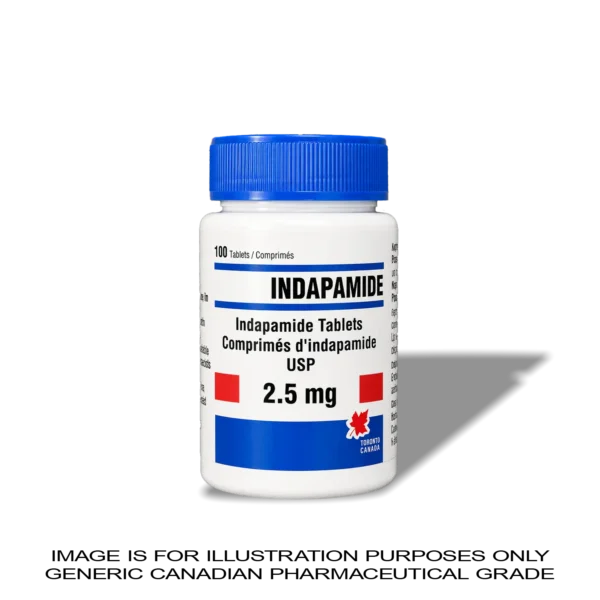
This product provides:
Active Ingredient: Indapamide
Strength: 2.5mg per tablet
Quantity: 100 Tablets
Drug Class: Thiazide Like Diuretic / Antihypertensive
Dosage Form: Oral Tablet
Common Uses: Hypertension and Fluid Retention
Indapamide 2.5mg is a prescription medication in Canada, with multiple 2.5mg formulations listed by Health Canada, including currently marketed products.
Because indapamide increases renal sodium and water excretion, it can affect fluid and electrolyte balance. Potential abnormalities include low potassium, low sodium and dehydration, particularly in susceptible patients or when combined with other medications that influence electrolytes or blood pressure. Periodic monitoring of electrolytes, kidney function and blood pressure may therefore be appropriate during treatment.
Indapamide may also increase uric acid levels, which can be relevant for patients with gout, and can influence blood glucose levels in some individuals. Patients with significant kidney or liver disease, diabetes, gout or existing electrolyte abnormalities may require additional monitoring.
Possible adverse effects include dizziness, weakness, headache, gastrointestinal symptoms and low blood pressure. Patients should seek medical attention for significant dehydration, severe weakness, abnormal heartbeat, confusion or other symptoms that could indicate a clinically important electrolyte disturbance.
Indapamide should be used according to the directions of a qualified healthcare professional, with treatment individualized according to blood pressure response, fluid balance, kidney function, electrolyte levels and other medications.
Reviews
There are no reviews yet.
Be the first to review “Indapamide 2.5mg – 100 Tablets”Cancel Reply



Reviews
There are no reviews yet.